
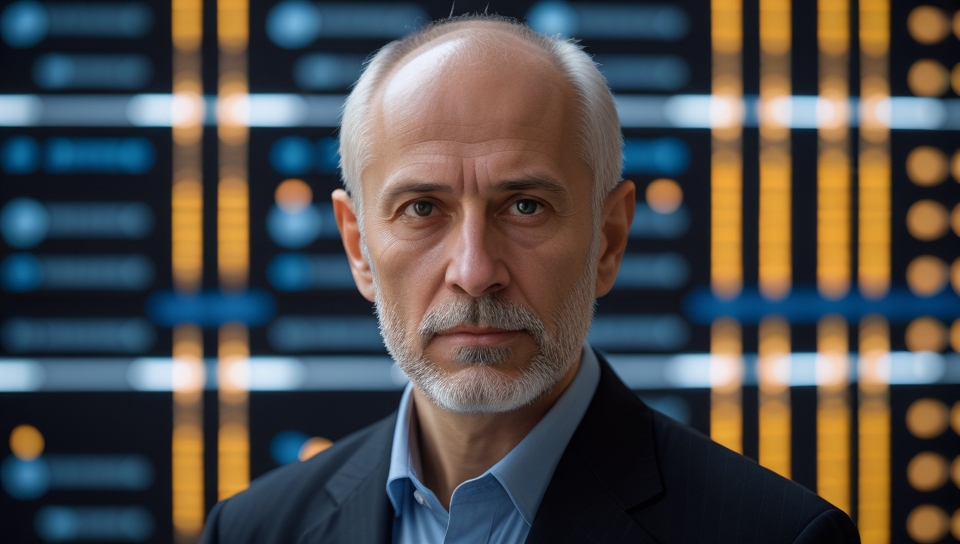
Manin Manifesto: Soviet Roots Driving Quantum Computing Innovations
Unveiling the Soviet Contribution to Quantum Computing
The fierce competition we see today between the US and China over quantum computing has deeper roots, stretching back to the Cold War era. The spotlight usually falls on Western advancements post-Sputnik, paralleled by the rise of silicon technologies. However, an often unacknowledged chapter unfolded within the Soviet Union, specifically through the pioneering perspectives offered by Yuri Manin. This distinguished mathematician, despite not being a physicist, laid the groundwork for contemporary quantum computing with his forward-thinking ideas. His “Manin Manifesto” of 1980 anticipated key principles that would eventually drive the quantum revolution, yet remained largely overlooked in Western narratives.
Revisiting Computational Foundations
At the core of computing lies Alan Turing’s 1936 concept of the Turing machine. While it revolutionized the field, its reliance on orderly, sequential processes restricted its ability to solve certain complex problems. Manin’s critique extended beyond these constraints, posing the question: does the Turing machine truly embody the essence of computation? By considering alternatives inspired by algebraic geometry and number theory, Manin proposed more nuanced models. Notably, he advocated for the use of continuous, analog processes to capture computations found in nature, arguing that classical computers fell short as mere approximations. These ideas laid the groundwork for marrying geometric properties with computing, hinting at a richer, more authentic form of computation.
Manin’s Legacy and the Path Forward
Yuri Manin’s legacy continues to resonate as researchers explore the realms of analog quantum computing. Today, continuous-variable quantum systems gain momentum, aligning with Manin’s early visions. These systems, which include the use of squeezed light, reflect Manin’s foresight and contribute to the growing interest in continuous computation beyond conventional digital realms. His insights underscore the importance of considering diverse approaches to computing, highlighting the enduring potential of Soviet contributions to the field’s future.
Stay informed with Qsentinel for more insights and stories!
Ready to take data security seriously?
Discover how Qsentinel can protect your organization against ransomware, enforce true data sovereignty, and stay ahead of the quantum threat. Their purpose-built workspace is designed for exactly that.

Get daily news in your inbox
The lastest on Hacks, ransomware attacks, post quantum security and more


