
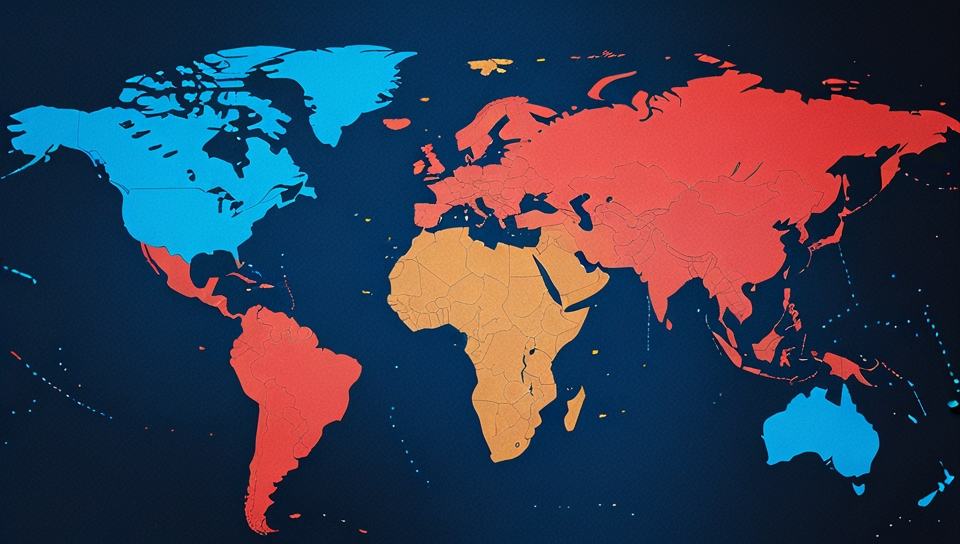
U.S. Diplomats Challenge EU Data Sovereignty in New AI Era
Navigating the New AI Front: U.S. Diplomats Challenge EU Data Sovereignty
In a pivotal move, a recently leaked memo reveals U.S. Secretary of State Marco Rubio’s strategy urging American diplomats worldwide to counter European data sovereignty initiatives. Framed as an “Action Request,” this directive suggests a significant shift in global data management geopolitics. Some interpret it as an outright challenge to the European General Data Protection Regulation (GDPR), with Washington aiming to preserve its influence over global data policies.
This memo emphasizes a confrontational stance by the Trump administration, encouraging U.S. diplomats to challenge the EU’s quest for independent data governance frameworks. As data emerges as a crucial commodity in the digital economy, this pushback intensifies the conflict between U.S. interests and European regulatory ambitions.
A Tectonic Shift in Digital Policy
The memo reveals a coordinated effort to counter proposed cross-border data flow restrictions, branding them as harmful to international business and cybersecurity. The State Department calls for support of forums advocating for unrestricted global data movement, positioning American ideals at the forefront of digital marketplace rules.
Rubio criticizes the GDPR as overly restrictive, likening European data protection to Chinese surveillance to undermine its legitimacy. This tactic aims to associate data sovereignty with increased authoritarianism, challenging Europe’s regulatory pursuits.
Economic Implications of the Data Landscape
The debate over data management extends beyond regulation, impacting economics profoundly. The global cloud infrastructure market is expanding, with U.S. firms like Amazon, Microsoft, and Google significantly leading in revenue, dwarfing European competitors. U.S. cloud providers dominate about 92% of the European market, accentuating the competitive challenges faced by European firms.
The Legal Dilemma: U.S. CLOUD Act vs. GDPR
Central to this conflict is the contradiction between the U.S. CLOUD Act, which allows American authorities access to data regardless of its location, and European regulations safeguarding personal data. Recent European Court of Justice rulings highlight the concerns over this extraterritorial reach, casting doubt on U.S. data protection assurances.
Rubio’s directive to oppose European laws while advocating for American frameworks underscores a broader strategy to maintain U.S. digital dominance, exemplifying the geopolitical nature of this issue.
Assessing Europe’s Response and Future Directions
The U.S.’s assertive stance has prompted calls for a European response to enhance regional data management capabilities. The anticipated EU Cloud and AI Development Act aims to bolster Europe’s digital sovereignty and reduce reliance on American technology.
Collaborations such as Gaia-X, involving major economies like Germany and France, focus on high data protection standards and a federated cloud ecosystem that promotes transparency and choice. Despite these initiatives, Europe faces challenges in scaling its cloud services to compete with U.S. giants.
The results of this data sovereignty discussion will shape European regulations and influence strategic independence in the global digital economy.
*****
Looking to get a deeper understanding of how digital transformation can empower your business? Contact Qsentinel today and discover expert insights tailored to your needs.
Ready to take data security seriously?
Discover how Qsentinel can protect your organization against ransomware, enforce true data sovereignty, and stay ahead of the quantum threat. Their purpose-built workspace is designed for exactly that.

Get daily news in your inbox
The lastest on Hacks, ransomware attacks, post quantum security and more


