
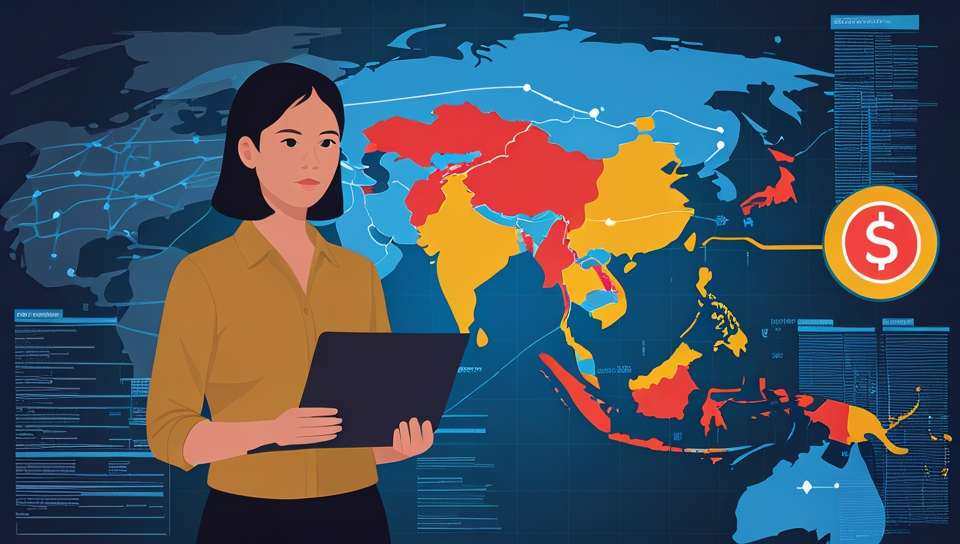
Data Sovereignty in Southeast Asia: Risks, Policies, and Economic Impact
The Complex Reality of Data Sovereignty
Southeast Asia is in the midst of a digital boom, with its internet economy skyrocketing from $100 billion in 2019 to a staggering $400 billion today. It’s a trend projected to reach $1 trillion by 2030. However, this growth is precariously perched on a tightrope due to a wave of data localization policies. Vietnam, for instance, has introduced regulations requiring foreign tech firms to store user data within its borders. The Philippines flirted with similar rules but pulled back after facing resistance. Meanwhile, Thailand, Indonesia, and Malaysia are mulling over their own versions of data localization. The goal is to boost sovereignty and security, but the reality might be more complicated.
Unintended Consequences of Protectionist Measures
In the Philippines, planned regulations set for 2025 would have restricted American cloud giants like AWS, Microsoft, and Google from handling governmental data, while exempting firms like Alibaba Cloud due to its local presence. This move unintentionally leaned towards geopolitical favoritism, prompting the Philippines to revise its stance. This scenario is a cautionary demonstration of how efforts to reduce tech dependency can paradoxically heighten it, particularly with firms from nations that trigger security concerns.
The Cost of Digital Borders
Data localization policies overlook a critical facet of modern digital economics: cross-border data sharing amplifies value. Machine learning and AI thrive on diverse datasets, and e-commerce and fintech require global data insights to function optimally. Constructing local data silos places significant financial pressure on countries, demanding investment levels that match tech behemoths like Amazon, Microsoft, and Google, which collectively spend over $150 billion annually on their cloud infrastructures. Nations like Vietnam, constrained by stringent laws, might miss out on AI opportunities, redirecting investments elsewhere.
The Security Mirage of Data Localization
Holding data domestically doesn’t necessarily equate to enhanced security. History has shown, like during Japan’s 2011 earthquake or South Korea’s 2025 fire, that localized storage can be vulnerable. Meanwhile, cloud services remained robust, as evidenced by Ukraine’s strategic move to cloud storage in 2022 amidst cyber threats. The Philippines and others lack the cybersecurity workforce needed to safeguard domestic data, undercutting claims of improved security through localization.
Navigating the Geopolitical Landscape
There’s a disconnect between American tech companies, driven by transparent legal protocols, and Chinese companies, often shadowed by governmental oversight. This discrepancy creates dependencies disadvantageous to Southeast Asia. Since 2015, China’s Digital Silk Road has embedded itself into the region’s digital framework, positioning Chinese companies advantageously over Western entities. Southeast Asia’s sovereignty isn’t fortified by shifting dependencies; it risks exacerbating them.
Building a Future-Proof Digital Ecosystem
Achieving true digital sovereignty lies in fostering intrinsic capacities rather than erecting restrictive barriers. Southeast Asia should craft nuanced regulations that shield sensitive data while promoting beneficial data flows across borders. Regional collaborations, paired with consistent investments in local talent and infrastructure, are pivotal. Singapore exemplifies this balance, ensuring data security while inviting foreign investment through a strong regulatory foundation. By distinguishing between genuine and perceived risks, Southeast Asia can sidestep tech stagnation and diminished independence, ensuring its place in the future digital economy.
Stay informed with Qsentinel’s expert insights on tech and digital transformation. Explore our latest analysis today!
Ready to take data security seriously?
Discover how Qsentinel can protect your organization against ransomware, enforce true data sovereignty, and stay ahead of the quantum threat. Their purpose-built workspace is designed for exactly that.

Get daily news in your inbox
The lastest on Hacks, ransomware attacks, post quantum security and more


