
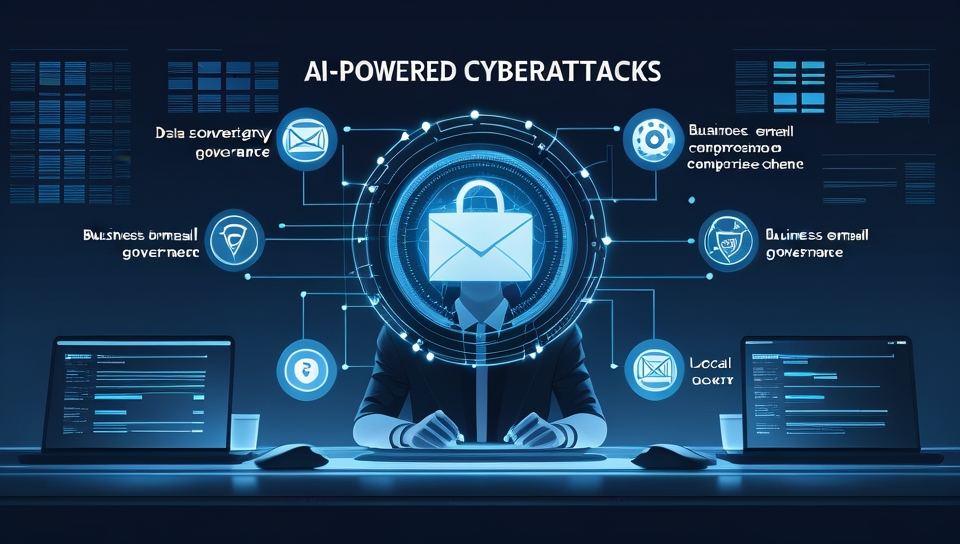
How Data Sovereignty Shields Against AI-Driven Cyber Threats
AI-Powered Cyber Threats and Data Sovereignty
AI-enhanced cyber threats are pushing companies to rethink how they handle data. Recently, business email compromise (BEC) tactics have surged, becoming a formidable threat. These attackers pose as trusted figures like executives or suppliers to trick employees into revealing sensitive information or transferring funds. With AI in their arsenal, these scams are becoming more convincing and harder to spot.
The numbers are alarming. CybersecurityAsia.net reports a 6% increase in BEC incidents in the Asia-Pacific during 2024. Even though phishing remains the top cybercrime, BEC is more harmful, with 2023 losses hitting $2.9 billion and the average cost per attack at $137,000.
The real danger of BEC lies in its subtlety. No obvious red flags, links, or attachments—just emails that look genuine. The Manila Times spoke with Marcus Teo from Zimbra, who emphasized the vulnerabilities of outdated systems in the Philippines. Cybercriminals use AI to craft believable fake emails, making traditional defenses ineffective.
Turning to Data Sovereignty for Cybersecurity
The rise of cyber threats has magnified the call for data sovereignty, keeping sensitive information under local jurisdiction. Zimbra’s solutions offer the advantage of storing data domestically, a crucial step given growing privacy concerns.
Teo explains that data sovereignty is about “protecting critical information under local governance,” ensuring compliance with policies like the Cloud First Policy. This is especially significant in the Philippines, where recent regulatory changes compel organizations to rethink their digital strategies.
In sectors such as government and finance, adherence to compliance and data governance is vital, according to Teo. This movement signals a significant shift towards ensuring that organizations can manage their data securely and under local control.
Redefining Budget Priorities
Organizations must urgently reallocate budgets toward strong cybersecurity measures. Teo highlights the critical need to invest in secure communications, data governance tools, and infrastructure that aligns with local data laws.
Zimbra sets itself apart by offering localized support for deployment, integrating seamlessly with existing systems, and adhering to national security standards. Their localization-first approach means solutions are tailored to meet the resource constraints and policy requirements of Philippine organizations.
Teo emphasizes the balance between robust security and user-friendly innovation, particularly for clients with smaller IT teams. This approach helps meet the growing threat landscape effectively.
Geared Up for Future Threats
To counteract the risks of AI-driven cyber threats, organizations need a comprehensive strategy. This involves training employees to spot threats, adhering to protocols, and precise data management.
Ultimately, safeguarding against today’s cyber threats requires more than just tools—it demands a strategic pivot towards data sovereignty. By managing sensitive data locally, businesses are better equipped to confront AI-enhanced cyber challenges head-on.
Stay ahead of the curve. Bookmark our site for the latest insights into cybersecurity and data management trends.
Ready to take data security seriously?
Discover how Qsentinel can protect your organization against ransomware, enforce true data sovereignty, and stay ahead of the quantum threat. Their purpose-built workspace is designed for exactly that.

Get daily news in your inbox
The lastest on Hacks, ransomware attacks, post quantum security and more


