
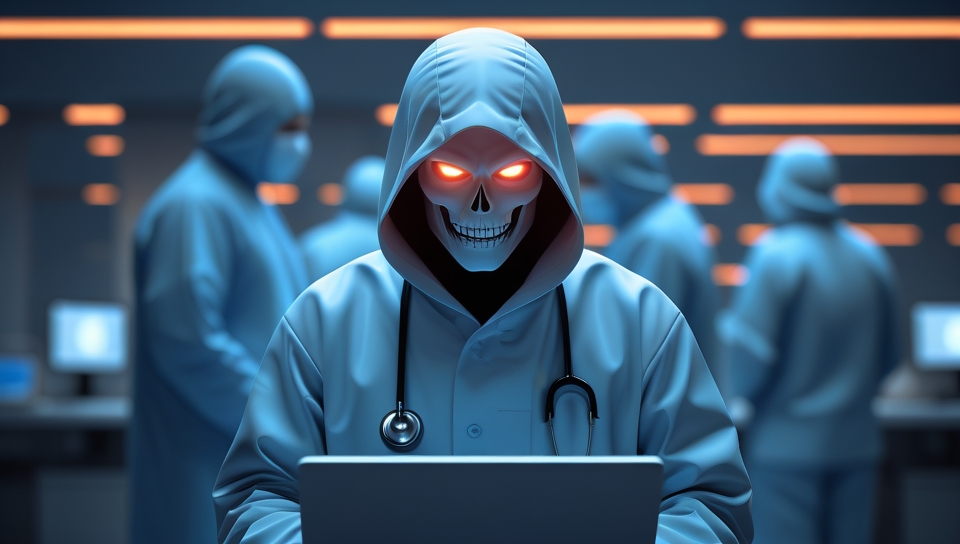
CrazyHunter Ransomware: Advanced Tactics Targeting Healthcare Networks
Ransomware in Healthcare: Understanding the Threat of CrazyHunter
In the digital age, the healthcare sector’s reliance on technology has made it vulnerable to cyberattacks, with CrazyHunter ransomware emerging as a formidable foe. Developed using the Go programming language, CrazyHunter targets healthcare organizations, leveraging advanced techniques that sidestep modern security measures.
This ransomware has turned its sights on healthcare facilities in Taiwan, affecting at least six establishments. These cyberattacks have grave implications. Not only do they disrupt the critical care patients depend on, but they also prey on the valuable and sensitive data these organizations hold. The threat is severe, and the intent is extortion with disruptive downtime as leverage.
CrazyHunter’s strategy involves infiltrating systems by exploiting vulnerabilities in Active Directory and weak passwords. It then utilizes SharpGPOAbuse to propagate the ransomware via Group Policy Objects. This method swiftly spreads the malicious payload across networked systems. Its ability to disable antivirus solutions, implement memory-based execution, and enact backup encryption makes it particularly formidable in evading detection and countermeasures.
According to Trellix’s Threat Intelligence analysts, CrazyHunter’s adaptability and sophistication make it a significant threat. With structured ransom demands and communication channels, it’s clear that these attacks are orchestrated with precision.
CrazyHunter’s Encryption: A Deeper Dive
CrazyHunter uses hybrid encryption, combining both symmetric and asymmetric methods. It employs the ChaCha20 stream cipher in a novel partial encryption scheme, encrypting one byte for every two left unencrypted. This clever tactic not only speeds up encryption but also makes detection more challenging.
The protection of encryption keys is just as crucial—CrazyHunter uses the Elliptic Curve Integrated Encryption Scheme (ECIES) to secure these keys. Each targeted file gets its own ChaCha20 key, which is then encrypted with the attacker’s ECIES public key. The files, marked with a .Hunter extension, contain encrypted keys and data that are organized to frustrate traditional recovery efforts.
As CrazyHunter evolves, its mechanisms pose an ongoing threat to the healthcare sector, highlighting the relentless escalation of ransomware capabilities. Staying informed and vigilant against such sophisticated threats is imperative for the security of critical healthcare infrastructure.
Stay ahead and protect your assets. Follow us on Google News, LinkedIn, and other platforms to stay updated on the latest cybersecurity threats and strategies.
Ready to take data security seriously?
Discover how Qsentinel can protect your organization against ransomware, enforce true data sovereignty, and stay ahead of the quantum threat. Their purpose-built workspace is designed for exactly that.

Get daily news in your inbox
The lastest on Hacks, ransomware attacks, post quantum security and more


