
Philippines Eyes Domestic Data Centers for Stronger Data Sovereignty
Investing in Domestic Data Centers
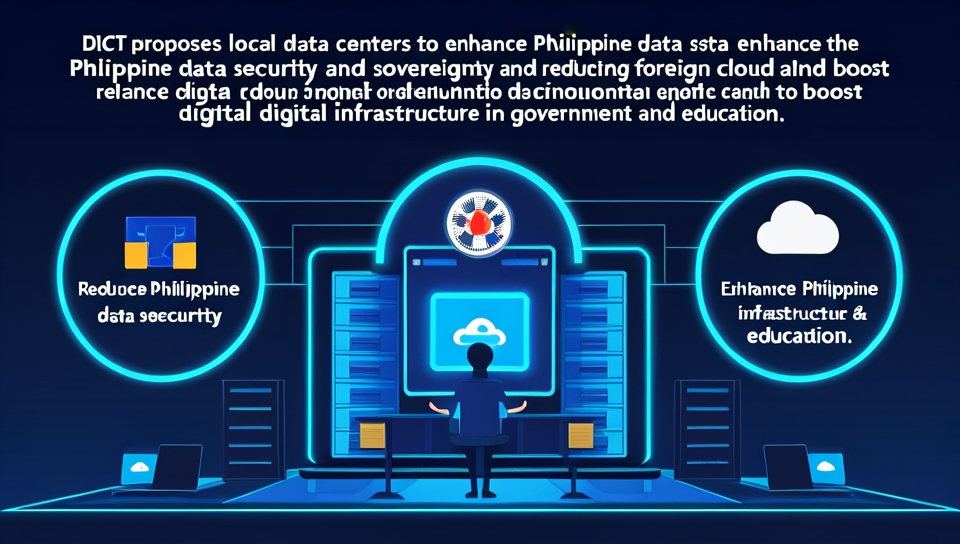
The Department of Information and Communications Technology (DICT) has unveiled a bold plan to create three government-owned data centers in the Philippines, budgeted at ₱2.5 billion annually over the next three years. This initiative seeks to enhance national data sovereignty by reducing reliance on international cloud services—a necessity emphasized during recent budget talks. Currently, around 90% of the nation’s sensitive data resides in foreign servers, primarily in Singapore.
DICT advocate Brian Poe highlighted the staggering cost of ₱12 billion annually on foreign cloud storage, alongside the security risks of external data hosting. The proposed data centers aim to keep sensitive data within national borders, ensuring tighter control and security.
Strategic Financial and Educational Investments
Beyond data centers, Representative Robert Nazal proposed utilizing the Spectrum Users Fee—receipts from telecom operators totaling ₱21 billion—to finance the project’s ambitious scope. This two-pronged approach is economically savvy, targeting a reduction in long-term international cloud costs.
The budget also earmarks funds for digital inclusivity, particularly in education. Plans to connect over 12,000 public schools underscore a commitment to extending internet access nationwide, vital for digital literacy and broader learning opportunities.
Addressing Broader Digital Challenges
Additional focus areas include investment in blockchain technology to secure government data and discussions on improving national broadband independence. Representative Antonio Tinio pointed out the nation’s over-reliance on international companies like Meta for broadband infrastructure management, advocating for localized control instead.
Despite the proactivity, challenges remain—the SIM Registration Act has yet to curb spam effectively, indicating a need to reevaluate its framework. Meanwhile, old technologies like 2G and 3G are slated for phase-out, as efforts escalate towards advanced mobile networks, boosting efficiency.
Finally, a collaborative effort with media partners aims to tackle online disinformation, underscoring a commitment to digital literacy and fact-checking.
> Curious about the future of tech and data security? Join us at Qsentinel to stay informed.
Ready to take data security seriously?
Discover how Qsentinel can protect your organization against ransomware, enforce true data sovereignty, and stay ahead of the quantum threat. Their purpose-built workspace is designed for exactly that.

Get daily news in your inbox
The lastest on Hacks, ransomware attacks, post quantum security and more


